Science & understanding
Electrical stimulation research in depression
A historical overview of electrical stimulation research in depression, preserving the original clinical references.
EVANES Editorial · November 13, 2024 · 3 min read
Historical article, originally published in 2024. Clinical and experimental vagus nerve stimulation research discussed here is not evidence that EVANES treats disease. EVANES is a non-medical wellness device, not a substitute for medical care or prescribed medication.
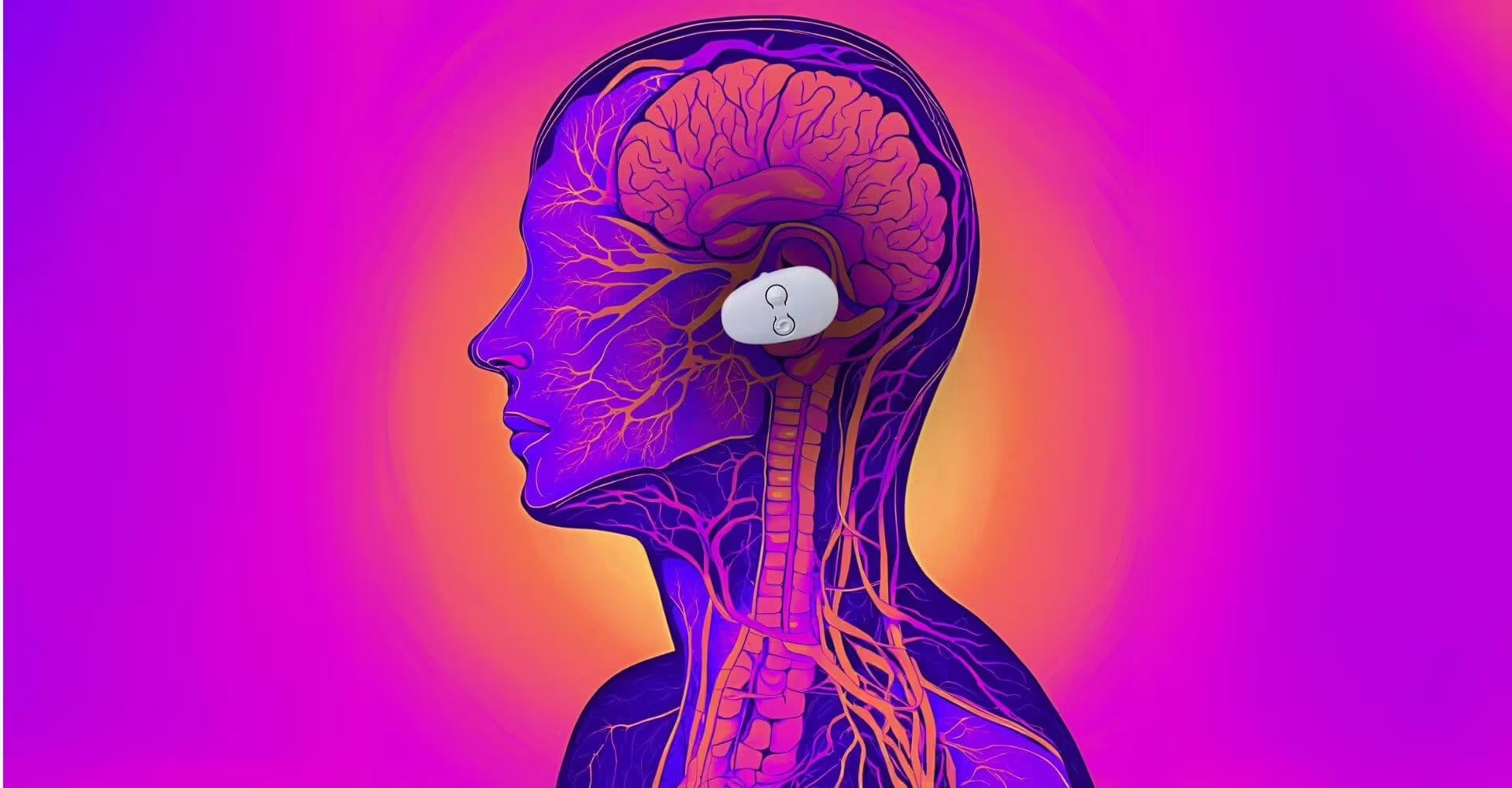
Bioelectric medicine and particularly the non-invasive brain neuromodulation is growing exciting new field. The main two efficient techniques that are available are magnetic and electrical stimulations. Among electrical stimulations, transcranial electrical stimulation such as tDCS are most common approaches. tDCSs are offered mainly for depression and they are becoming more available thanks to a recently developed “Adjustable Helmet Frame“. Nevertheless, electrical bottom-up techniques are making their way, in particular, the transcutaneous auricular vagus nerve stimulation taVNS. Invasive VNS (stimulating the cervical VN trunk) has been available for decades with official indications for epilepsy and depression. TaVNS is a researched technique of interest for potential clinical applications; safety and effectiveness depend on the specific method and indication. taVNS has been shown to stimulate brain structures in the same way as invasive VNS.
TaVNS has already been shown to relieve stress by returning sympathetic preponderance back to normal by increasing the parasympathetic (PNS) activity (Lehtimäki et al 2013, Ylikoski et al 2017). Because of this PNS stimulating capacity taVNS has been considered to be particularly suitable for the treatment of depression. Several clinical studies have investigated taVNS in patients with depression.
References:
Hein E, Nowak M, Kiess O, Biermann T, Bayerlein K, Kornhuber J, Kraus T Auricular transcutaneous electrical nerve stimulation in depressed patients: a randomized controlled pilot study. J Neural Transm (Vienna). 2013 May;120(5):821-7.
https://doi.org/10.1007/s00702-012-0908-6
Trevizol AP, Shiozawa P, Taiar I, Soares A, Gomes JS, Barros MD, Liquidato BM, Cordeiro Q Transcutaneous Vagus Nerve Stimulation (taVNS) for Major Depressive Disorder: An Open Label Proof-of-Concept Trial..Brain Stimul. 2016 May-Jun;9(3):453-4.
https://doi.org/10.1016/j.brs.2016.02.001
Pardo JV Adjunctive vagus nerve stimulation for treatment-resistant bipolar disorder: managing device failure or the end of battery life. BMJ Case Rep. 2016 Mar 7;2016.
https://doi.org/10.1136/bcr-2015-213949
Fang J, Egorova N, Rong P et al Early cortical biomarkers of longitudinal transcutaneous vagus nerve stimulation treatment success in depression. Neuroimage Clin. 2016 Dec 18;14:105-111.
https://doi.org/10.1016/j.nicl.2016.12.016
Kong J, Fang J, Park J, et al. Treating Depression with Transcutaneous Auricular Vagus Nerve Stimulation: State of the Art and Future Perspectives. Front Psychiatry. 2018; 9: 20.
https://doi.org/10.3389/fpsyt.2018.00020
Tu Y, Fang J, Cao J, et al. A distinct biomarker of continuous transcutaneous vagus nerve stimulation treatment in major depressive disorder. Brain Stimul. 2018; 11: 501-08.
https://doi.org/10.1016/j.brs.2018.01.006
Photo by Growtika on Unsplash
https://unsplash.com/@growtika?utm_content=creditCopyText&utm_medium=referral&utm_source=unsplash